Investment Strategy for HNI Investors: Beyond Returns

For high-net-worth investors, the challenge is not simply finding investment opportunities. It is deciding how capital should be allocated across competing priorities, how much risk is appropriate and how each investment supports a broader financial objective.
A portfolio may contain several attractive investments and still lack balance. Capital may be concentrated in similar assets, tied up in investments with limited liquidity or allocated without sufficient consideration of future financial commitments.
For HNI and ultra-HNI investors, investment strategy therefore extends beyond product selection. It involves understanding capital allocation, portfolio diversification, risk and liquidity—and how these factors influence the overall financial position.
Capital Allocation Begins With Clear Objectives
An investment decision should begin with the purpose of the capital, not the popularity of an opportunity.
An entrepreneur preparing for business expansion may have different priorities from an investor focused on long-term capital appreciation or someone who requires regular income. Even investors with similar levels of wealth can have different financial obligations, time horizons and tolerance for uncertainty.
Before committing capital, investors should consider their financial objectives, investment horizon, capacity to absorb potential losses, liquidity requirements and existing investment exposures.
These factors establish the context for evaluating an opportunity. Without them, it becomes difficult to determine whether an investment is suitable for the investor’s circumstances.
The objective is to make decisions that reflect the intended purpose of the capital rather than evaluate opportunities in isolation.
Portfolio Diversification Requires a Wider Perspective
Holding multiple investments does not automatically create a well-diversified portfolio.
Different funds, securities or financial instruments may share exposure to the same sectors, companies or economic conditions. As a result, a portfolio with numerous holdings can still be vulnerable to similar underlying risks.
A broader assessment considers asset allocation, concentration, overlapping exposures and how different holdings may respond to changing market conditions.
For HNI and ultra-HNI investors, this assessment may also extend beyond financial investments. Business ownership, real estate and other substantial commitments can influence the overall distribution of wealth and the level of risk already present in the investor’s financial position.
The purpose of diversification is not simply to increase the number of holdings. It is to understand how investments fit together and how their combined exposures relate to the investor’s objectives.
Evaluate Risk Alongside Potential Returns
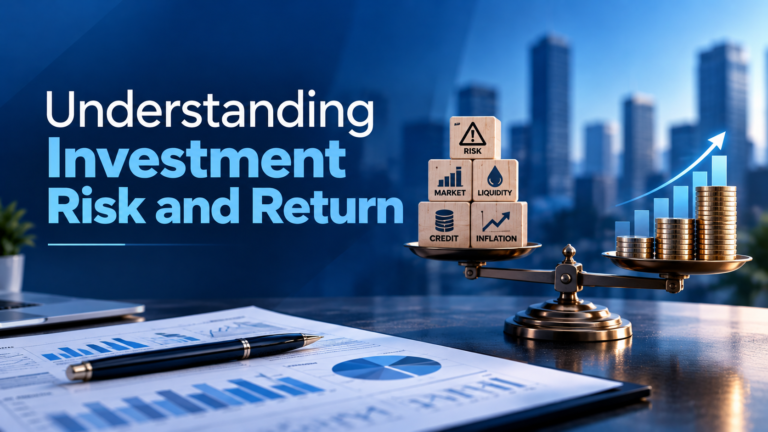
Potential returns are only one part of an investment decision. The risks involved, the possibility of capital loss, the investment horizon and the conditions attached to an exit deserve equal consideration.
Market-linked investments may fluctuate in value. Debt instruments can involve credit and interest-rate risks. Alternative investment strategies may introduce additional complexity, longer holding periods or restrictions on withdrawals.
A higher potential return does not automatically justify a higher allocation. Investors should understand what assumptions support the expected outcome and what could happen if those assumptions prove incorrect.
For example, an attractive interest rate on a debenture does not remove the need to assess the issuer’s creditworthiness and repayment obligations. Similarly, an AIF should be evaluated in light of its strategy, costs, structure and exit conditions.
No investment approach can eliminate risk or guarantee a particular outcome. The objective is to understand the trade-offs before capital is committed.
Choosing Between Mutual Funds, Debentures and AIFs
Different investment avenues have different structures and characteristics. Their suitability depends on the specific investment, the investor’s circumstances and the role the investment is intended to serve.
Mutual funds
Mutual funds provide access to professionally managed portfolios across different asset classes and investment strategies. Relevant considerations include the scheme’s investment objective, underlying holdings, costs, risk profile, liquidity and suitability for the intended investment horizon.
Explore mutual fund services from I cap financial services for information about the company’s offering.
Debentures
Debentures are debt instruments issued to raise capital. Their terms and risks can vary significantly by issuer and instrument.
Investors should consider creditworthiness, interest payments, repayment terms, security arrangements where applicable and the possibility of default or limited liquidity. The stated interest rate alone does not provide a complete picture of the investment’s risk.
Alternative Investment Funds (AIFs)
Alternative Investment Funds can provide access to investment strategies and asset classes beyond conventional investment products. Depending on the fund, investors may need to consider eligibility requirements, minimum commitments, fees, investment restrictions, liquidity and exit terms.
Understanding the fund’s strategy and reviewing its documentation are important before committing capital.
Learn more about Alternative Investment Fund services from I cap financial services.
These investment categories are not interchangeable. Each should be assessed on its own characteristics and in the context of the investor’s wider financial position.
Liquidity Is a Strategic Consideration
Liquidity matters when investment capital may also be needed for business activities, family commitments or future opportunities.
An investment with restricted withdrawals may be appropriate for a long-term objective but unsuitable for money that could be needed at short notice. The distinction is important when deciding how much capital to commit and for how long.
Investors should consider upcoming financial obligations, expected cash-flow requirements and the terms governing access to their money.
The objective is not necessarily to keep every investment immediately accessible. It is to ensure that the overall allocation reflects the investor’s need for flexibility.
Review the Portfolio as Circumstances Change
An investment strategy should be reassessed when the circumstances behind it change.
Business commitments, financial priorities, investment horizons and risk tolerance can evolve over time. These changes may affect the suitability of existing holdings or the balance between different investment categories.
Periodic reviews can help identify concentration, reassess liquidity requirements and determine whether the original investment rationale remains relevant.
However, a review does not require reacting to every short-term market movement. Decisions should be considered in the context of the investment’s purpose, time horizon and underlying risks.
A More Deliberate Approach to Wealth
Investment strategy for HNI investors is ultimately about making informed decisions across competing priorities.
Capital allocation, diversification, risk assessment and liquidity are connected considerations. Each influences how an investment fits within the broader portfolio and whether it supports the investor’s financial objectives.
Understanding individual products is important, but so is understanding the overall financial position in which those products sit.
For investors managing substantial wealth, the objective is not to pursue every opportunity or focus exclusively on projected returns. It is to evaluate opportunities with a clear purpose and a realistic understanding of their risks and trade-offs before committing capital.
About I cap financial services
I cap financial services provides investment-related services, including mutual funds, debentures and Alternative Investment Funds, as identified in its public service information. For further information, visit icapfinserv.com.
Disclaimer: This article is intended for general informational and educational purposes only. It does not constitute personalised investment advice, an offer or solicitation to invest, or a recommendation to buy or sell any financial instrument. Investments involve risks, including possible loss of capital. Product features, eligibility, suitability, liquidity and other terms vary.
Investors should review the relevant documentation and consider their individual circumstances before making investment decisions.