Understanding Investment Risk Before Return

When evaluating an investment, one of the first questions people ask is how much they could earn. But before looking at the potential return, it is equally important to understand what could go wrong.
An investment may offer attractive growth potential, but it could also expose your money to market fluctuations, limited liquidity or the possibility of losing capital. These factors matter just as much as the returns being discussed.
For high-net-worth individuals (HNIs), business owners and long-term investors, understanding investment risk before return means looking at the complete picture: the opportunity, the potential downside and how the investment fits into their wider financial plans.
The aim is not to avoid every risk. It is to understand the risks involved and decide whether they are appropriate for your financial goals.
What Is the Relationship Between Investment Risk and Return?
Investment risk refers to the uncertainty surrounding an investment’s outcome, including the possibility of losing money. Return is the gain or loss generated over a particular period.
In general, investments with higher potential returns tend to involve greater risk. However, taking more risk does not guarantee better returns. An investment can lose value even when the expected reward appears attractive.
Consider two hypothetical investment options. One may offer relatively predictable income with limited growth potential, while another may provide greater growth opportunities but experience significant fluctuations in value.
Neither option is automatically better. The right choice depends on when the money will be needed, the investor’s financial position and their ability to handle potential losses.
Before investing, ask yourself three questions:
- What return am I expecting, and why?
- What could cause this investment to lose value?
- If the investment performs poorly, will it affect my other financial commitments?
These questions help shift the focus from return expectations alone to the overall suitability of an investment.
1. Understand the Different Types of Investment Risk
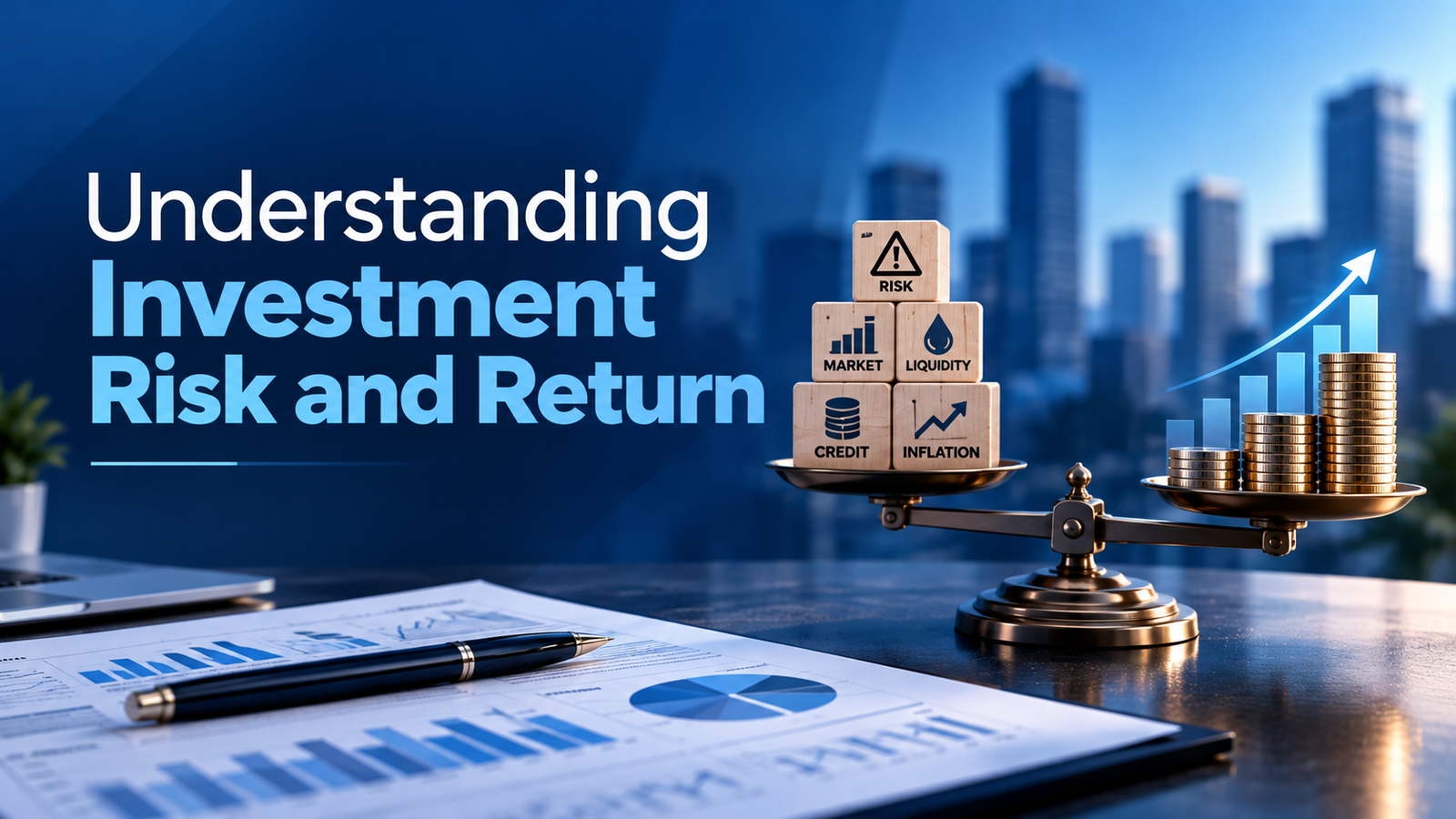
Investment risk is not limited to stock market movements. Different investments carry different risks, and more than one type of risk can affect a portfolio at the same time.
Market Risk
Market risk is the possibility of losing money because of changes in financial markets. Interest rates, inflation, economic conditions, company performance and global events can all influence investment values.
For example, a change in interest rates may affect bond prices, while weaker business performance can put pressure on share prices. Understanding what drives an investment’s value helps investors make more informed decisions.
Concentration Risk
Concentration risk arises when too much wealth is tied to one company, sector, asset class or source of income.
This is particularly relevant for business owners. Their personal wealth, business income and investments may all depend on the same industry. If that sector faces difficulties, several parts of their financial position could be affected together.
Liquidity Risk
Liquidity risk refers to the possibility that an investment cannot be sold quickly at a reasonable price when money is needed.
Some listed investments are generally easier to sell than products with lock-in periods or limited secondary markets. However, liquidity can also become a concern during periods of market stress.
Investors with business commitments, upcoming expenses or planned purchases should consider how much money needs to remain accessible.
Credit Risk
Credit risk is the possibility that a borrower or issuer will not make interest payments or repay the principal as agreed.
This is relevant when evaluating corporate bonds, debentures and other debt instruments. Investors should consider the issuer’s financial position, credit quality, repayment terms and the possibility of default.
Inflation Risk
Inflation reduces the purchasing power of money over time.
An investment may generate a positive nominal return but still deliver a weaker outcome after accounting for inflation, taxes and costs. This matters when planning for long-term expenses, retirement or future family needs.
Understanding these risks provides a more complete picture of an investment than looking at its expected return alone.
2. Know Your Risk Tolerance and Risk Capacity
Two investors may have similar financial resources but very different investment needs. This is where risk tolerance and risk capacity become important.
Risk tolerance describes how comfortable someone is with uncertainty and fluctuations in investment value. Risk capacity refers to their financial ability to absorb losses without compromising important goals or obligations.
For example, a business owner may be comfortable with market volatility but need a substantial amount of money for a business payment within the next year. Although their willingness to take risk may be high, their financial capacity to withstand a loss on that particular amount may be limited.
Another investor may have a long investment horizon and sufficient financial resources but still prefer a more conservative approach.
Before choosing an investment, consider:
- When you will need the money.
- Whether you depend on your investments for regular income.
- How much loss you could absorb without affecting important goals.
- Your existing loans, business exposure and financial commitments.
- Whether you can remain invested during periods of market volatility.
A suitable investment strategy should account for both your comfort with risk and your actual financial circumstances.
3. Match Investments to Your Financial Goals
An investment should be evaluated in the context of what the money is meant to achieve.
Money set aside for a near-term expense has different priorities from money intended for a long-term financial goal. The first may require greater emphasis on capital preservation and access to funds, while the second may allow more time to manage market fluctuations, depending on the investor’s circumstances.
Consider a business owner planning to purchase commercial property in 12 months. If the money allocated for the purchase falls significantly in value shortly before the payment is due, the purchase itself could be affected.
The same individual may have separate funds intended for long-term wealth creation. Those funds could be assessed using a different investment horizon and risk framework.
Before investing, be clear about three things:
- Purpose: What is the money intended for?
- Timeline: When will you need access to it?
- Financial impact: What would happen if the investment lost value?
These factors help determine whether an investment’s risk profile is appropriate for the goal it is intended to support.
4. Look at Risk Across Your Entire Portfolio
An investment may appear reasonable on its own but introduce too much risk when combined with existing holdings.
Imagine a business owner whose wealth is largely tied to their own company. They also invest in other businesses within the same sector and rely on their company for most of their income.
Although they may hold several investments, their overall financial position could still depend heavily on one industry.
This is why portfolio risk should be assessed as a whole.
Consider the following questions:
- How much of your wealth is linked to one company or sector?
- Do multiple mutual funds hold similar underlying investments?
- How much of your portfolio can be accessed when required?
- Could the same economic event affect several investments at once?
- Would a significant loss interfere with your financial commitments?
Diversification can reduce dependence on individual investments or sectors, but it cannot eliminate all investment risk or guarantee positive returns.
The objective is to understand how different investments work together and whether the overall portfolio remains aligned with your financial goals.
5. Understand the Risks Before Choosing an Investment Product
Different investment products have different features, costs and risks. Comparing them only on the basis of potential returns can leave important details overlooked.
Equities and Mutual Funds
Equities offer exposure to companies and their potential growth, but their market values can fluctuate significantly. Mutual fund risks depend on the underlying assets, investment strategy, concentration and market conditions.
Before investing, review the fund’s objective, portfolio composition, costs and relevant risk information.
You can explore mutual fund investing with I cap financial services.
Fixed-Income Investments and Debentures
Fixed-income investments may provide scheduled interest payments, but they are not automatically risk-free. Credit quality, interest-rate movements, repayment terms and liquidity can all affect the outcome.
A stated interest rate should not be mistaken for a guarantee that every payment will be made. Investors should understand the issuer’s financial position and the terms of the instrument.
Portfolio Management Services (PMS)
Portfolio Management Services involve managing investments under a defined mandate. The risks depend on the investment strategy, securities selected, market conditions and the investor’s objectives.
Before considering PMS, understand the investment mandate, fees, reporting process and potential for losses.
Learn more about Portfolio Management Services (PMS).
Alternative Investment Funds (AIFs)
Alternative Investment Funds can provide access to specialised investment strategies, but their structures and risks vary.
Depending on the fund, investors may need to consider eligibility requirements, investment thresholds, limited liquidity, longer holding periods, fees and the possibility of significant losses.
Review the fund’s documentation, strategy, associated costs and exit conditions before committing capital.
Explore Alternative Investment Funds (AIFs).
The important point is to understand what an investment involves before deciding whether it belongs in your portfolio.
6. Do Not Rely on Past Performance Alone
Historical performance can provide useful context, but it cannot tell investors exactly what an investment will earn in the future.
An investment that performed well during favourable market conditions may behave differently when interest rates, economic growth or investor sentiment change. A short period of strong performance may also fail to reveal the full range of risks involved.
When reviewing an investment’s performance, consider:
- The period over which returns were generated.
- The market conditions during that period.
- The level of risk taken to achieve those returns.
- Applicable fees, expenses and taxes.
- Whether the investment remains suitable for your financial goals.
A high historical return, by itself, does not establish that an investment is appropriate for every investor.
Performance should be considered alongside risk, costs, consistency and suitability.
7. Review Your Investments as Your Circumstances Change
Investment risk is not fixed. Market conditions change, businesses evolve and personal financial responsibilities can increase or decrease over time.
A portfolio that once suited an investor’s circumstances may eventually need to be reassessed.
A regular review can help answer some important questions:
- Are your financial goals and timelines still the same?
- Has market movement changed your intended asset allocation?
- Has your exposure to one company, sector or asset class increased?
- Do you have enough accessible funds for upcoming commitments?
- Have the issuer’s circumstances, investment strategy or exit terms changed?
- Are you assessing performance alongside the risks taken and the original investment objective?
The frequency of review depends on your financial circumstances and the investments you hold. Significant changes in your goals, income or financial commitments may warrant an earlier assessment.
The purpose is not to react to every market movement. It is to make sure your investment decisions continue to reflect your actual needs.
Making Informed Investment Decisions
Every investment comes with its own set of risks. Before choosing where to invest, understand how much risk you are taking, when you may need the money and whether a potential loss could affect your financial goals.
For HNIs and business owners, this also means looking beyond individual investments and considering how their overall wealth is allocated.
Returns matter, but they should not be the only factor behind an investment decision. Understanding the potential downside, liquidity requirements and role of each investment can help you make choices that better suit your financial needs and long-term plans.
Frequently Asked Questions
What is investment risk and return?
Investment risk refers to uncertainty about an investment’s outcome, including the possibility of losing money. Return is the gain or loss generated over a period. Higher potential returns often involve higher risk, but greater risk does not guarantee better returns.
Why is it important to understand investment risk before investing?
Understanding risk helps investors assess possible losses, liquidity restrictions and whether an investment is suitable for their financial goals and ability to absorb losses.
What is the difference between risk tolerance and risk capacity?
Risk tolerance describes an investor’s comfort with uncertainty and fluctuations in value. Risk capacity describes their financial ability to withstand losses without compromising important goals or obligations.
Does diversification eliminate investment risk?
No. Diversification can reduce dependence on individual investments or asset classes, but it cannot eliminate all risks, including broad market risk.
Are fixed-income investments risk-free?
No. Fixed-income instruments may involve credit risk, interest-rate risk and liquidity risk, depending on their structure and issuer.
How often should an investment portfolio be reviewed?
A portfolio should be reviewed periodically and when significant changes occur in financial goals, market exposure, liquidity requirements or personal circumstances. The appropriate frequency depends on the investor’s situation and investments.
Disclaimer: This article is for general informational purposes only and does not constitute investment, legal or tax advice. Investments are subject to market risks, including the possible loss of capital. Investors should review relevant product documentation and seek qualified professional advice where appropriate.