How We Evaluate Investment Opportunities

An investment opportunity can look attractive on paper and still be the wrong fit for a portfolio.
For HNI and ultra-HNI investors, the decision often involves more than comparing potential returns. Capital may already be spread across equities, mutual funds, Portfolio Management Services (PMS), Alternative Investment Funds (AIFs), debentures, unlisted shares, property and business interests. Each new investment needs to be considered in the context of the investor’s wider financial position.
The important questions are not just how much an investment could earn, but what supports its value, what risks are involved, how easily the capital can be accessed and whether the opportunity fits the investor’s objectives.
Here are the key factors to consider when evaluating an investment opportunity.
1. Start With the Investor’s Financial Objectives
Before looking at a product, understand what the investment is expected to achieve.
A business owner whose wealth is already tied up in a company may have different priorities from a senior executive planning for retirement. An investor with upcoming financial commitments may need greater access to cash than someone investing for a longer period.
The starting point is to consider:
- Investment objective: What is the capital intended to achieve?
- Time horizon: When might the money be needed?
- Liquidity requirements: How much capital should remain accessible?
- Risk capacity: How much financial loss could the investor absorb without affecting other commitments?
- Existing investments: How much exposure already exists to particular companies, sectors or asset classes?
These considerations help establish the role a new investment should play. Without that context, an attractive opportunity may not be appropriate for a particular investor.
2. Understand What You Are Investing In
A compelling pitch or a strong growth story is not a substitute for understanding the investment itself.
For an equity investment, this means examining the business model, profitability, cash flows, debt, competitive position and management. For a fund, it means understanding its objectives, underlying holdings, investment strategy, manager and associated risks.
Depending on the investment, relevant information may include audited financial statements, company disclosures, fund factsheets, offer documents, financial agreements and other available records.
SEBI Investor’s due diligence guidance recommends examining factors such as a company’s business model, financial health, competitors and valuation before investing.
It is equally important to recognise the limitations of the available information. If certain details cannot be verified or are not publicly available, that uncertainty should form part of the evaluation.
3. Assess the Valuation, Not Just the Potential
A good business is not automatically a good investment at every price.
Valuation helps investors assess whether the price being paid is reasonable relative to the investment’s fundamentals and potential outcomes.
For listed equities, this may involve examining earnings, cash flows, debt, comparable companies and future growth assumptions. For unlisted shares, investors may also need to consider the availability of financial information, comparable transactions and restrictions on transferring their holdings.
For funds and managed portfolios, the evaluation should include the investment strategy, underlying exposure, associated costs and the risks being taken.
It is also useful to consider less favourable scenarios. What happens if growth slows, borrowing costs increase, a company faces financial pressure or an expected exit takes longer than anticipated?
These questions help distinguish an investment’s potential from the assumptions required to achieve it. Expected returns should always be considered alongside the possibility of losses.
4. Understand the Risks and Exit Conditions
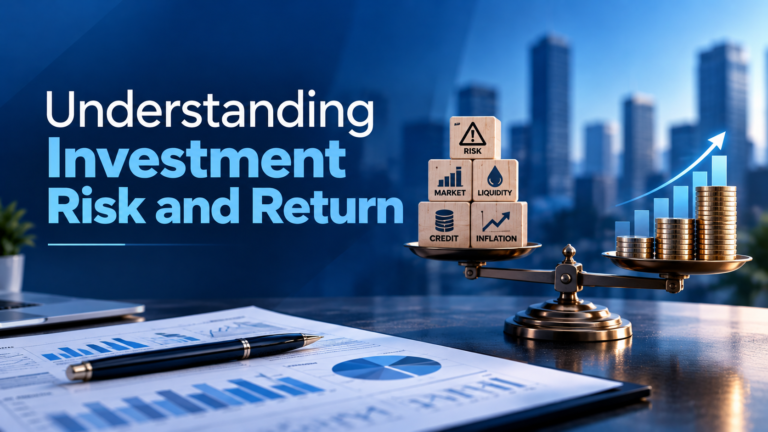
Different investments carry different risks. Understanding these risks before committing capital is an important part of the evaluation.
Market risk: The value of an investment may decline because of market movements, economic conditions, interest rates or changes in investor sentiment.
Credit risk: A borrower or issuer may be unable to make interest payments or repay the principal as agreed.
Liquidity risk: An investment may be difficult to sell when capital is needed, or may have to be sold at an unfavourable price.
Concentration risk: A large proportion of capital may depend on one company, sector, strategy or economic outcome.
Business and governance risk: Weak operations, poor decisions, conflicts of interest or inadequate disclosures may affect an investment’s value.
Exit conditions deserve particular attention. Listed shares, mutual funds, certain AIFs, debentures and unlisted shares may have very different selling, redemption and transfer arrangements.
Before investing, understand not only how an opportunity might perform, but also what would happen if access to the capital were needed earlier than expected.
5. Evaluate Each Investment According to Its Structure
A single checklist cannot replace product-specific due diligence. Each investment type requires different considerations.
Mutual Funds and SIPs
Review the fund’s objective, benchmark, underlying holdings, expense ratio, investment strategy and risk profile. Consider whether it overlaps with investments already held in the portfolio.
A Systematic Investment Plan (SIP) is a way of investing regularly, usually in a mutual fund. Starting an SIP does not remove the need to evaluate the underlying fund.
Explore mutual fund investment options.
Portfolio Management Services (PMS)
Understand the investment mandate, portfolio manager, holdings, benchmark, concentration, fees and exit terms. Historical performance should be assessed in context, including the level of risk taken and market conditions during the period.
The key consideration is whether the strategy and its associated risks fit the investor’s objectives.
Learn more about Portfolio Management Services.
Alternative Investment Funds (AIFs)
Review the fund’s strategy, manager, investment horizon, capital commitments, fee structure, valuation process and liquidity restrictions. The relevant offer documents and agreements should be examined carefully.
AIFs can differ substantially in their strategies and structures, so investors should evaluate the specific fund rather than treating all AIFs as interchangeable.
Explore Alternative Investment Funds.
Debentures
The interest rate alone does not determine whether a debenture is appropriate. Review the issuer’s financial strength, credit risk, maturity, repayment terms, security, covenants and available exit options.
A credit rating may provide useful information, but it is not a guarantee against default. Investors should understand the possibility of delayed payments or loss of capital.
View debenture investment options.
Unlisted and Pre-IPO Shares
Evaluate the underlying business, available financial information, valuation, shareholder rights, transfer restrictions and potential exit routes.
An anticipated stock-market listing should not be treated as certain. Listing plans and timelines may change, and investors may have limited opportunities to sell their shares.
Learn more about unlisted and pre-IPO investments.
6. Consider How the Investment Fits Into the Existing Portfolio
An investment should not be evaluated in isolation. Its role within the wider portfolio is just as important as its individual characteristics.
For example, adding another equity fund may appear to increase diversification. However, if its holdings closely overlap with existing investments, the improvement may be limited.
Similarly, a business owner whose wealth is already concentrated in one industry may need to consider whether another investment in the same sector increases that exposure.
Diversification is not simply about owning more products. It is about understanding how different holdings behave, which risks they share and how much capital depends on a particular outcome.
Liquidity should also be considered at the portfolio level. Capital committed to less liquid investments needs to be assessed alongside business requirements, planned expenses and other foreseeable cash needs.
A portfolio review can help identify overlapping holdings, concentration and investments that may no longer serve their original purpose.
7. Account for Fees, Terms and Tax Implications
Investment costs can affect the amount an investor ultimately retains.
Depending on the product, costs may include brokerage, expense ratios, management fees, performance-linked charges, transaction costs and other applicable expenses. Review how charges are calculated and whether quoted performance is before or after fees.
Contractual terms matter as well. Understand the applicable lock-in, withdrawal conditions, transfer restrictions, settlement process and any other limits on access to capital.
Tax treatment may vary by instrument, transaction and individual circumstances. Where needed, investors should consult an appropriately qualified tax professional before making a decision.
These details may receive less attention than potential returns, but they can materially affect the overall investment outcome.
8. Know What Would Change the Investment Case
Evaluation should not end once an investment has been made.
It is useful to identify the assumptions behind the original decision and the developments that would warrant reassessment.
For a company, this could include a material deterioration in its financial position, a change in business strategy or new governance concerns. For a debenture, it could be a weakening ability of the issuer to meet its obligations. For a fund, a significant change in its mandate, management or risk exposure may deserve attention.
Investors should also revisit their holdings when their own circumstances change. A new business commitment, a major expense or a shorter investment horizon can alter the role an investment needs to play.
The objective is not to react to every short-term market movement. It is to review the investment when the facts, risks or objectives supporting the original decision materially change.
When It Makes Sense to Pass on an Opportunity
Not every opportunity needs to become an investment.
It may be worth stepping back if the available information is insufficient, the valuation relies on overly optimistic assumptions, the exit route is unclear or the risks do not fit the investor’s circumstances.
The same applies when costs and contractual terms are difficult to understand, or when pressure to act quickly replaces a clear explanation of the investment.
Being selective is part of a disciplined approach. Investors do not need to participate in every opportunity; they need to understand the ones they choose.
Exploring Investment Services With I cap financial services
I cap financial services lists investment-related services across PMS, AIFs, mutual funds, debentures and unlisted/pre-IPO investments, alongside its portfolio review offering.
The checks required will depend on the investment and the investor’s circumstances. Understanding the underlying investment, its costs and risks, liquidity requirements and role within the wider portfolio can help clarify the considerations involved before making a decision.
Investors who want to review their existing holdings can learn more about the portfolio review service.
Frequently Asked Questions
What should you check before investing?
Start with the investment objective, underlying fundamentals, valuation, risks, liquidity, costs and exit conditions. The checks should be tailored to the product and your financial circumstances.
Is past performance enough to evaluate an investment?
No. Past performance provides context but does not guarantee future results. The strategy, valuation, risks taken, fees and current investment conditions also matter.
How do you evaluate an AIF differently from a mutual fund?
An AIF may have a different fund structure, investment strategy, capital commitment, tenure and liquidity restrictions. Mutual funds have their own objectives, holdings, expense ratios and redemption terms. Review the relevant documents for the specific product rather than assuming they work in the same way.
Why does portfolio fit matter when choosing an investment?
A product that appears attractive individually may increase existing concentration, duplicate current holdings or tie up money that may be needed elsewhere. Portfolio fit helps investors consider these trade-offs before committing capital.
Disclaimer
This article is for general informational and educational purposes only. It does not constitute personalised investment advice or a recommendation to buy or sell any security or financial product. Investments are subject to market risks, including the possible loss of capital. Past performance does not guarantee future results. Investors should review the relevant product documents, understand the associated risks and consider their individual financial circumstances before making investment decisions.